Hungary › Railway lines
Line H5 - Szentendrei HÉV
Szentendre – Budapest-Batthyány tér
Budapest – Esztergom
Hungarian Open Air Museum Szentendre
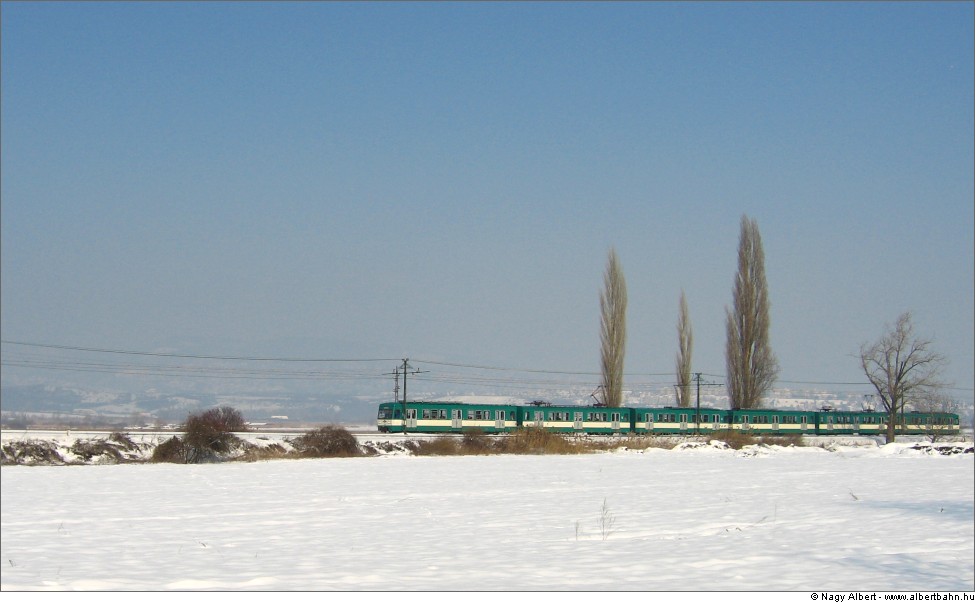


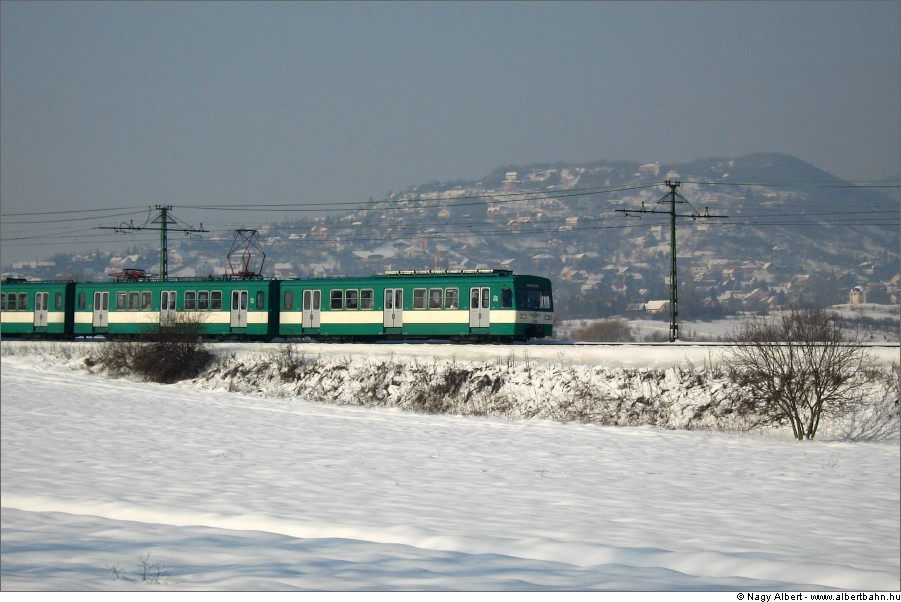
The train runs on a wide snow-covered landscape between Szentendre and Pomáz.
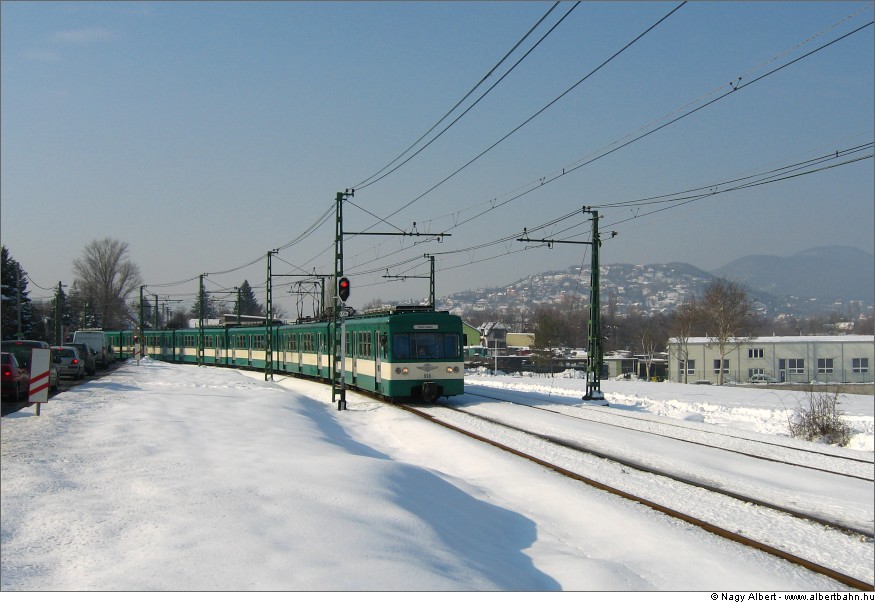
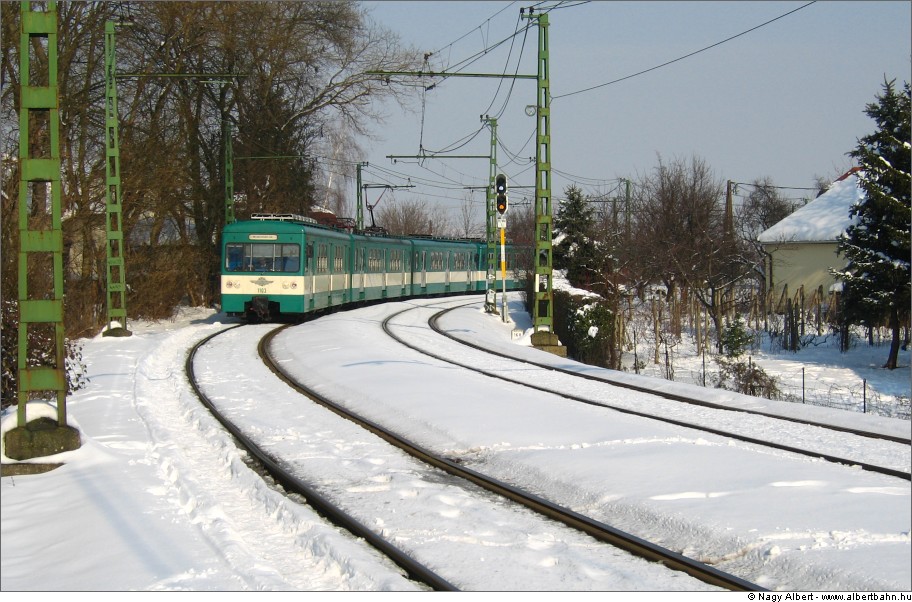
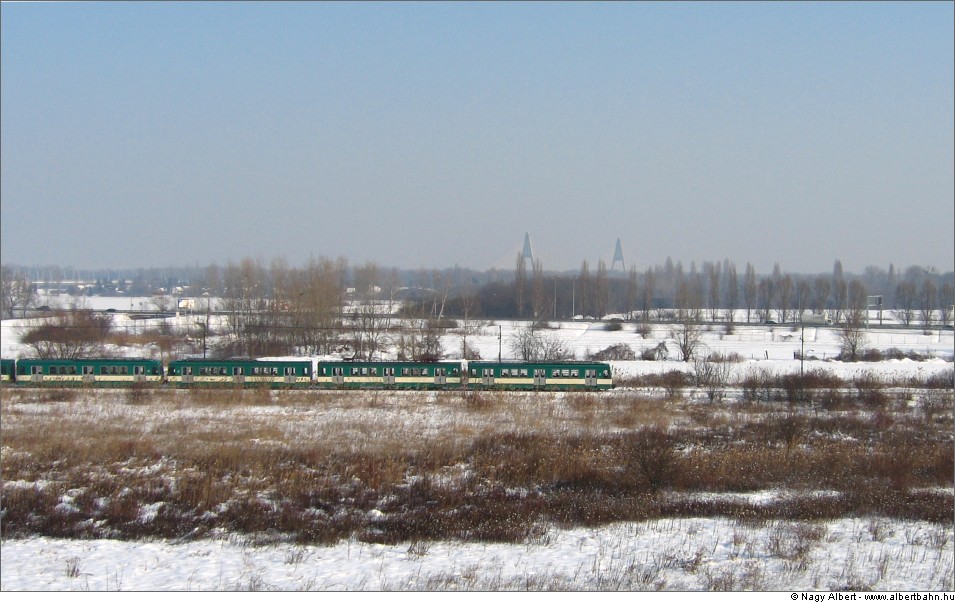
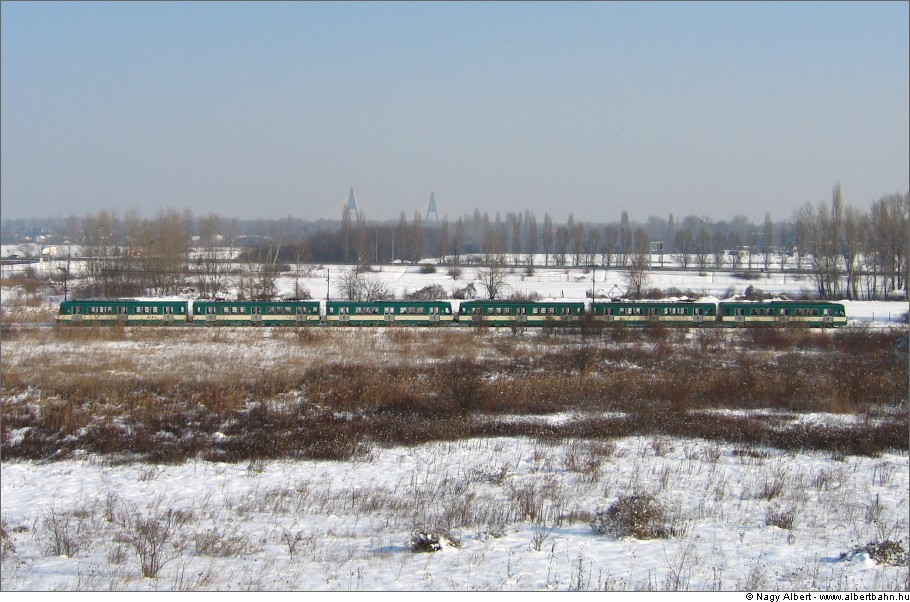
In Pomáz and at the city border of Budapest, near Békásmegyer
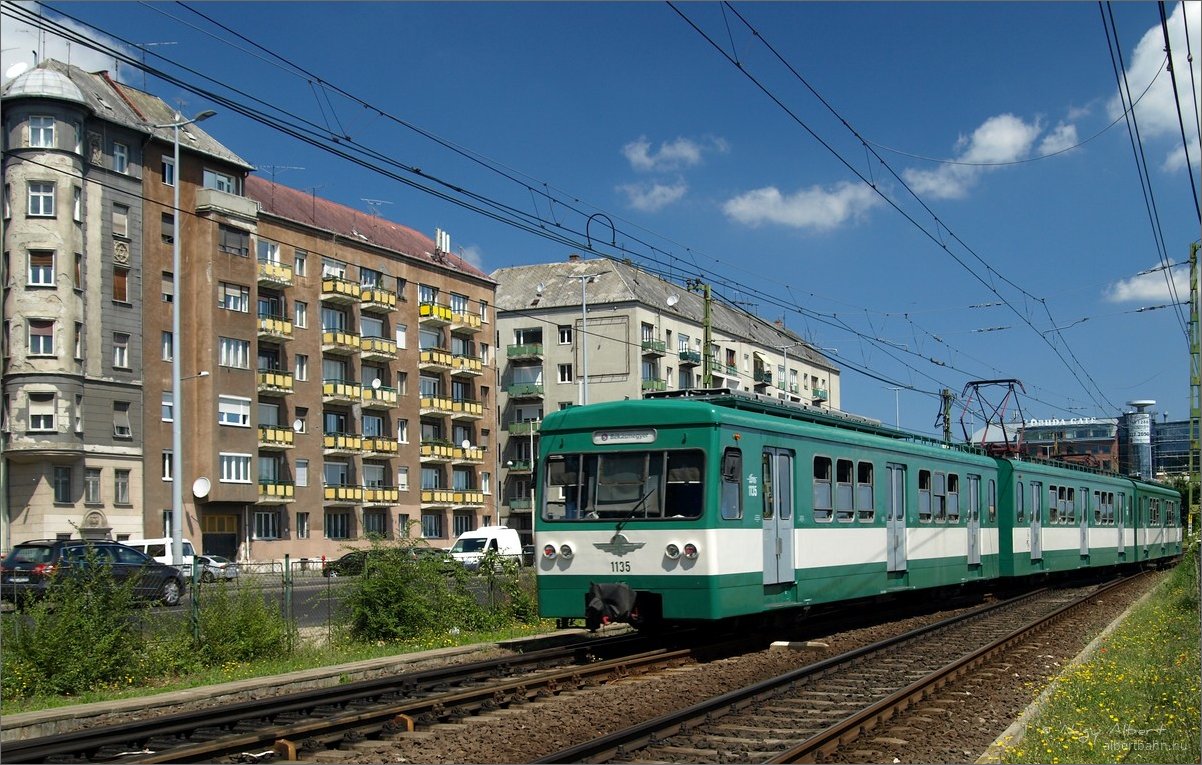
The 16 km long local railway (Hungarian: Helyi Érdekű Vasút, shortened: HÉV) between Szentendre and Filatorigát was opened in 1888. From 1895, the steam trains ran to Pálffy Square (today: Bem József tér) using the circular railway which led to Déli Pályaudvar station. The line was electrified in 1914 with 1000 V DC. In 1937, a new terminus was built on the northern side of the Margaret Bridge (Margit híd). The today's Batthyány tér underground station was opened in December 1972, together with the M2 metro line. The HÉV line (called H5 since 2011) is 21 km long, its northern extension to Visegrád failed in the 1920s.
Nowadays, the passenger traffic is operated exclusively with class MXA electric multiple units. Freight trains are very rare: regular freight traffic was shut down in 1997.
The Szentendrei HÉV became part of BKV (Budapest Transport) in 1968. Since 1 November 2016 it had been operated - together with the other HÉV lines of Budapest - by the new BHÉV Zrt. (Budapest Local Railways Inc.), which was transferred to the state in 2017, and since March 1 it has been living on as MÁV-HÉV, a subsidiary of Hungarian State Railways.
Békásmegyer


Spring and winter in Békásmegyer
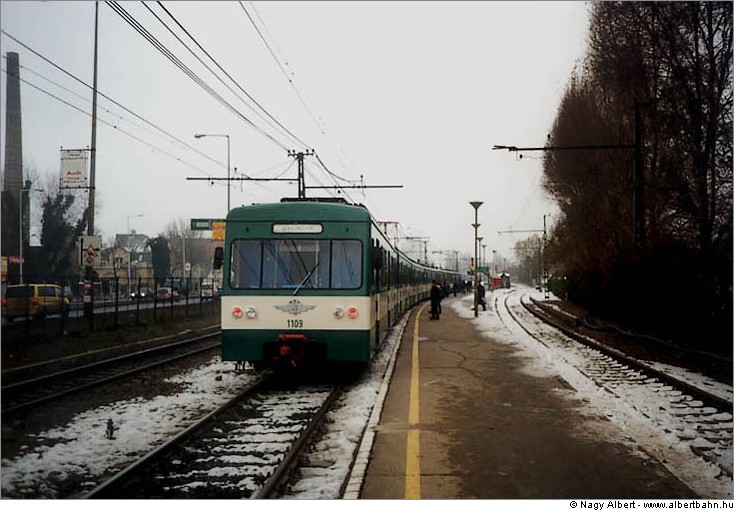
Békásmegyer is the last station inside the borders of Budapest. It was built in 1981, in the centre of the huge housing estate (with its 50000 inhabitants, it is the largest housing estate of Hungary).
The tracks of the station are accessible through an underpass.
Aquincum
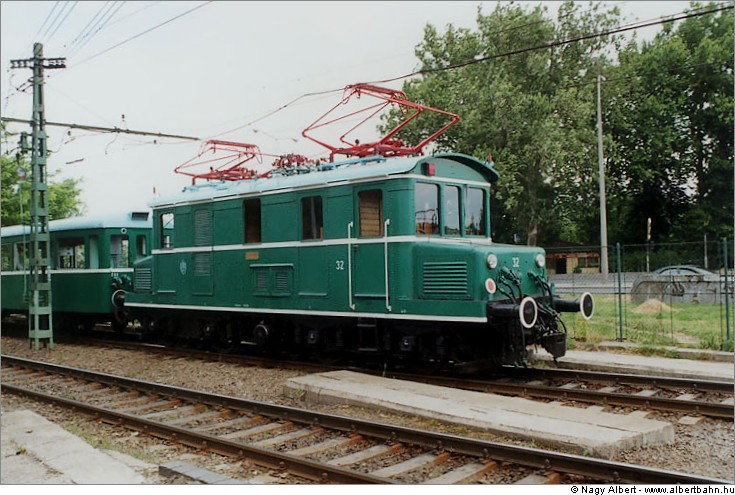
Electric locomotive L VI 32, after an excursion on the Budapest-Gödöllő line as a nostalgia train
Aquincum elágazás
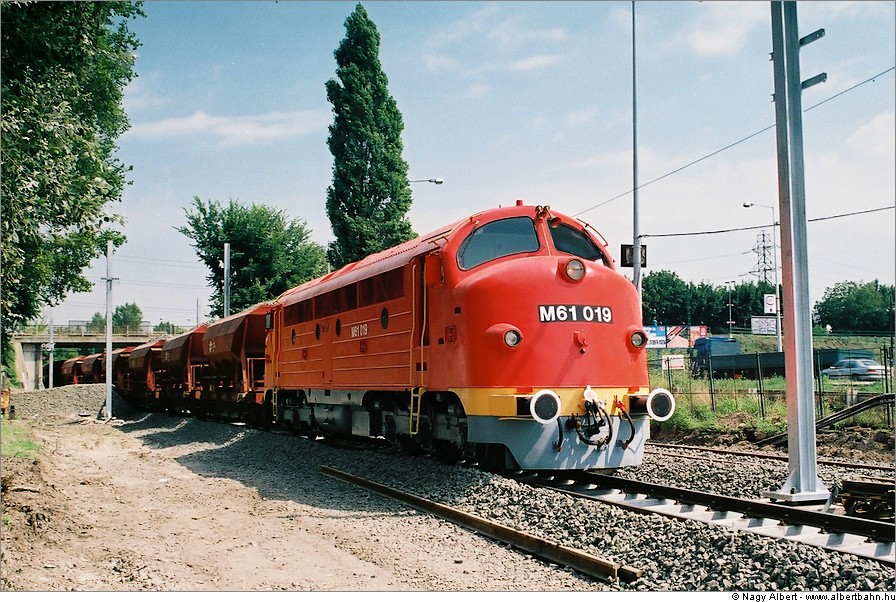

When removing the tracks' superstructure, the old ballast was collected between the trees. Now, as the new tracks have been laid, the ballast will be loaded in a train. The NOHAB locomotive pulls the full train over the bare tracks, where the cars will be unloaded.
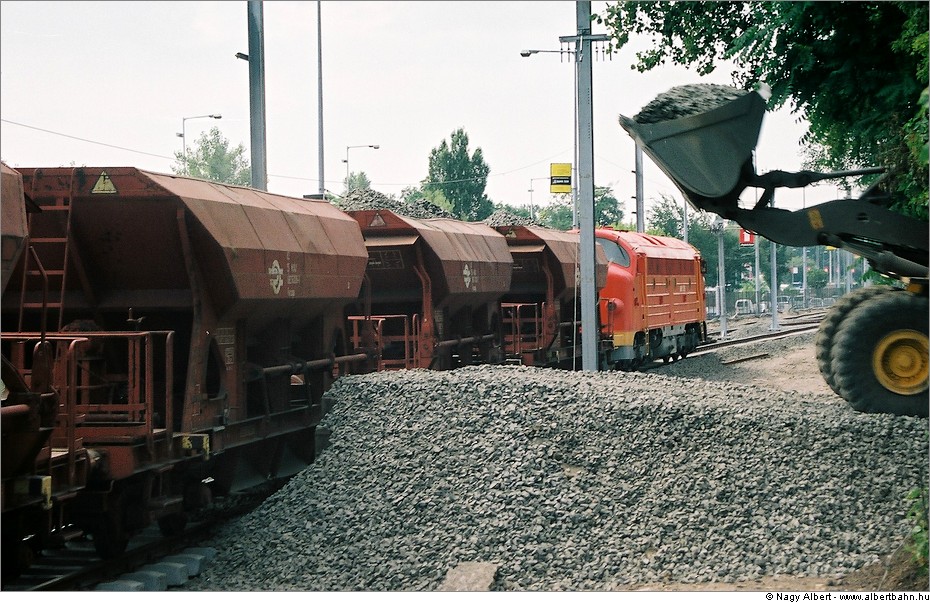
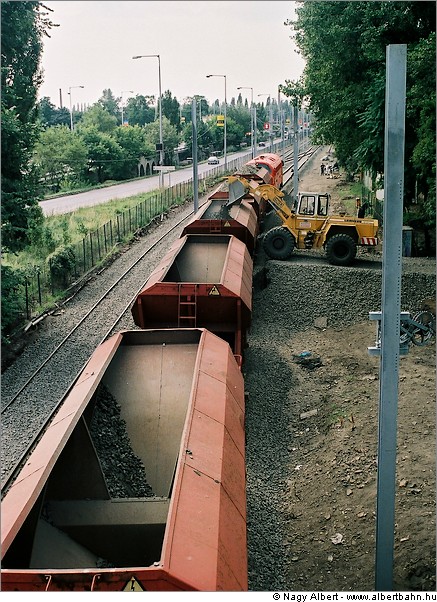
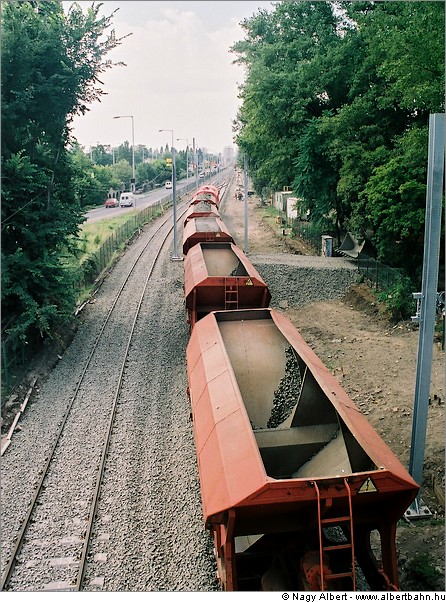
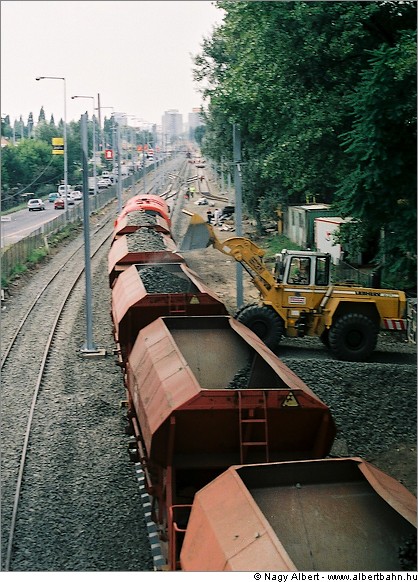
Aquincum elágazás (Aquincum junction) is the only connection between the HÉV line and the MÁV network. As a matter of fact, it is a station without passenger traffic - no scheduled train stops here.
The connection track reaches the MÁV line 2 Esztergom-Budapest at Óbuda station. The latter station was electrified - together with the connection track - in HÉV system (1000 V DC), but the catenary was removed after the freight traffic shutdown on the HÉV line. The HÉV has 3 tracks between Kaszásdűlő station stop and the junction. The HÉV trains are hauled by diesel locomotives on the MÁV line (e.g. when transporting trainsets between the HÉV lines of Bdapest).
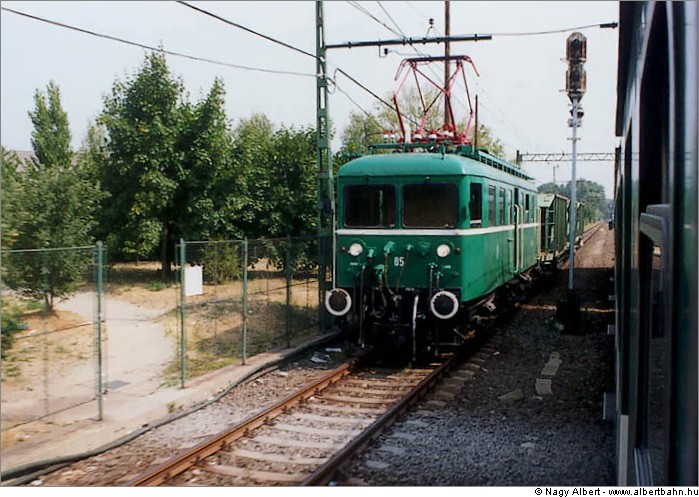
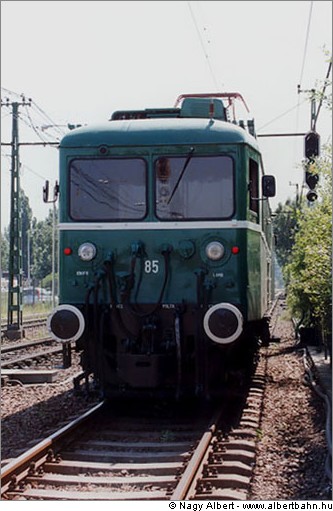
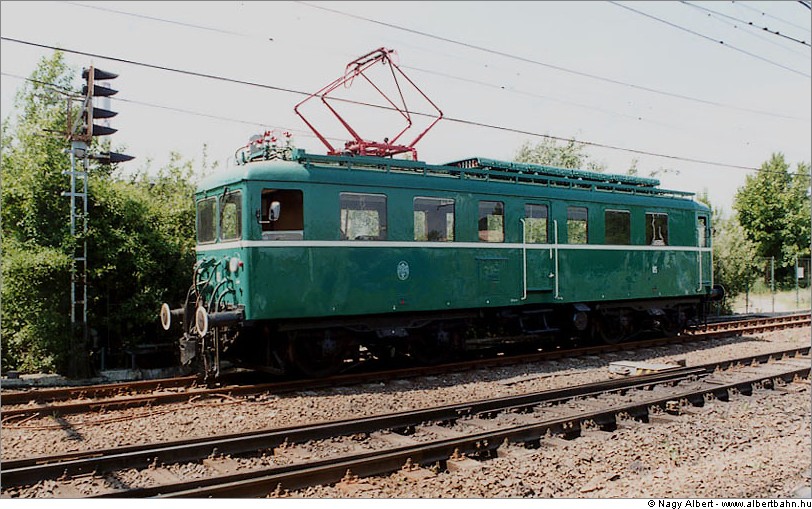
Electric locomotive L VII 85 at Aquincum elágazás

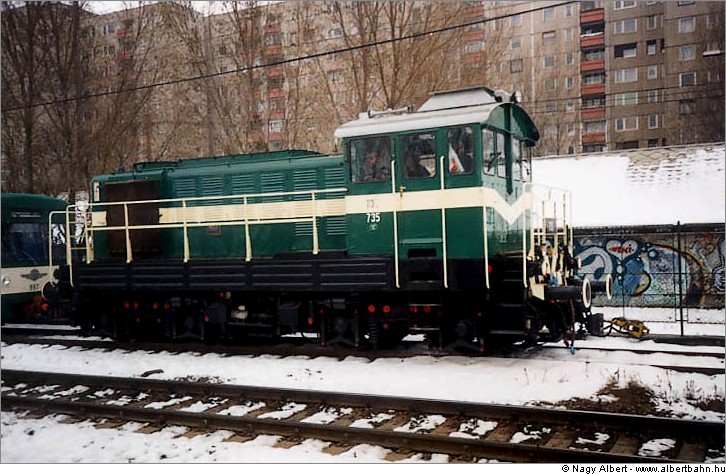
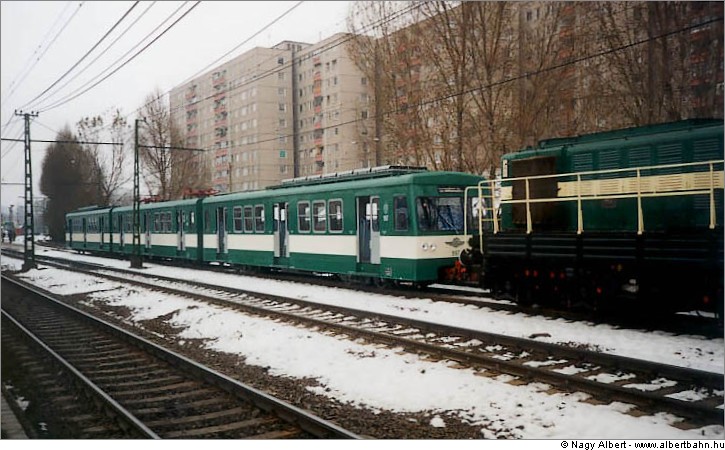
Diesel locomotive DL XVI 735 with a just renewed MXA
Kaszásdűlő
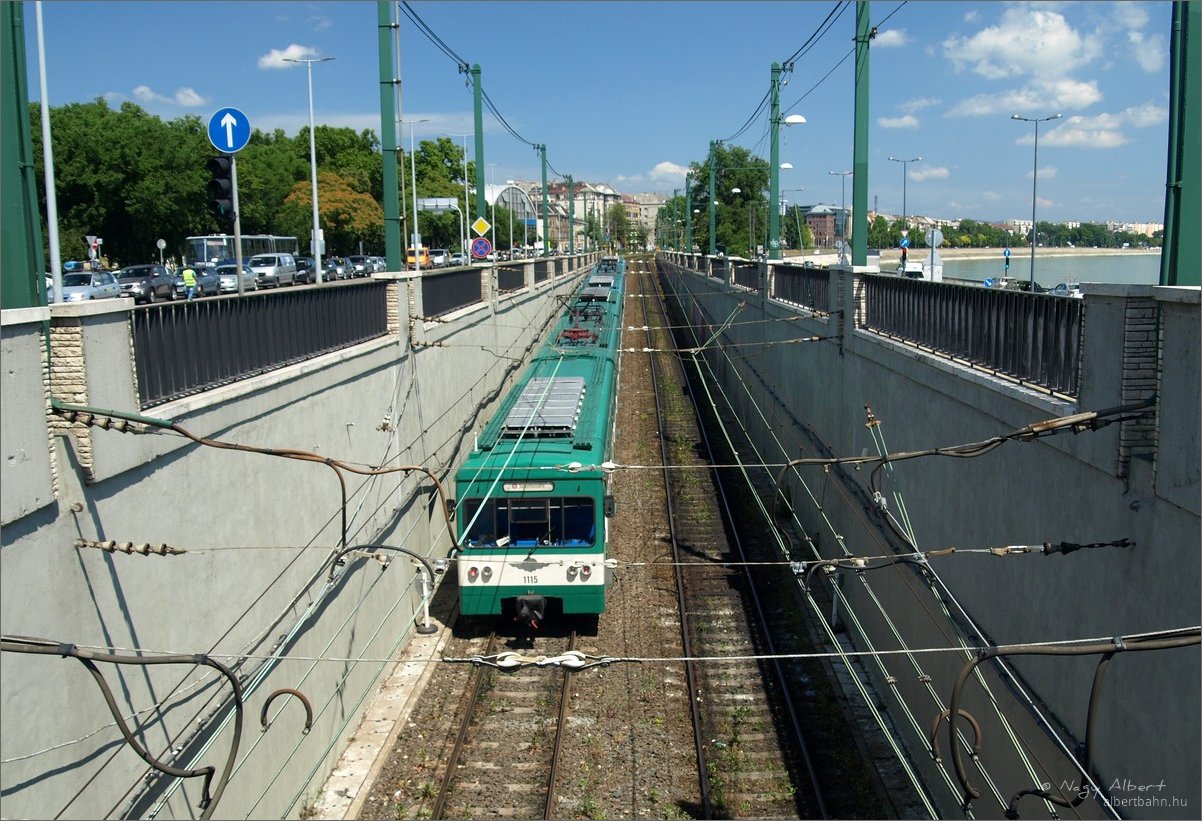
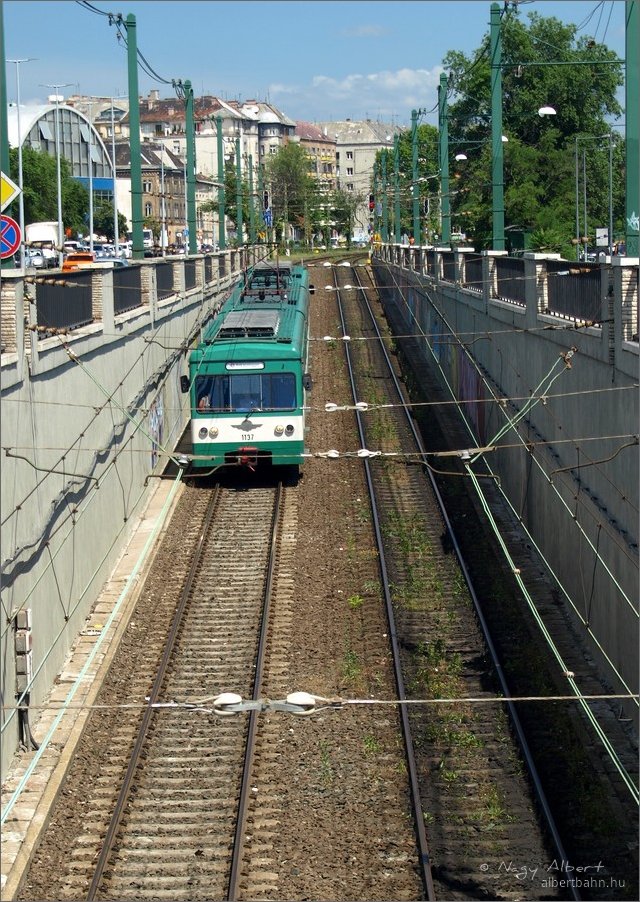
In the summer of 2015 in connection with the construction of the interweaving tram network's connecting section between Margaret Bridge and Batthyány Square, the HÉV tunnel's slab structure was reinforced - eg. a colonnade was built at Batthyány tér terminal. During the works, the HÉV's southern terminus was Margit híd station, the trains used the switches on the surface for reversing.
Batthyány tér
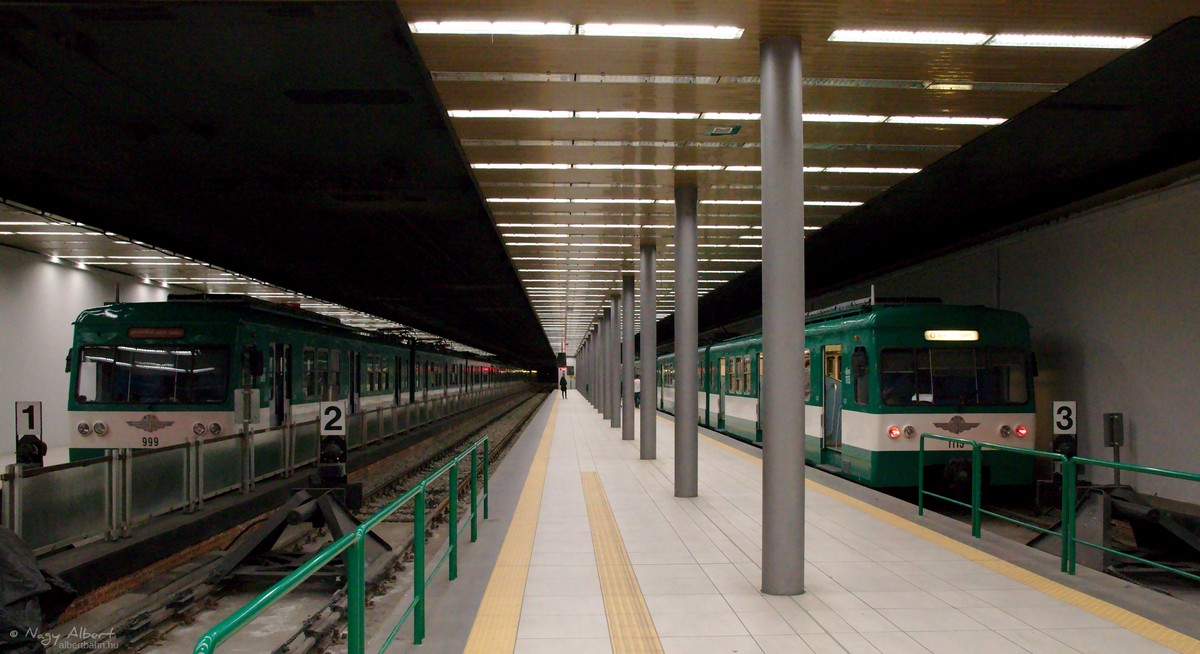
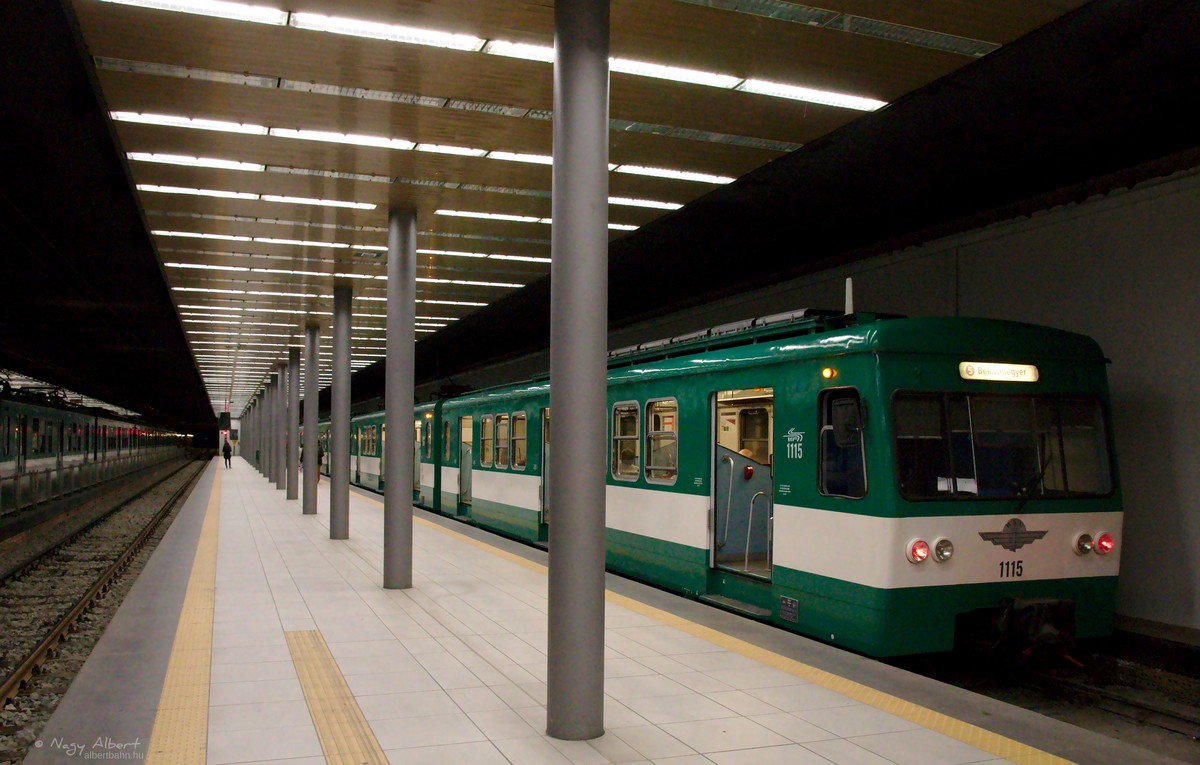

The terminus in 2016 with the new columns. The slab has to bear the new tram line as well.
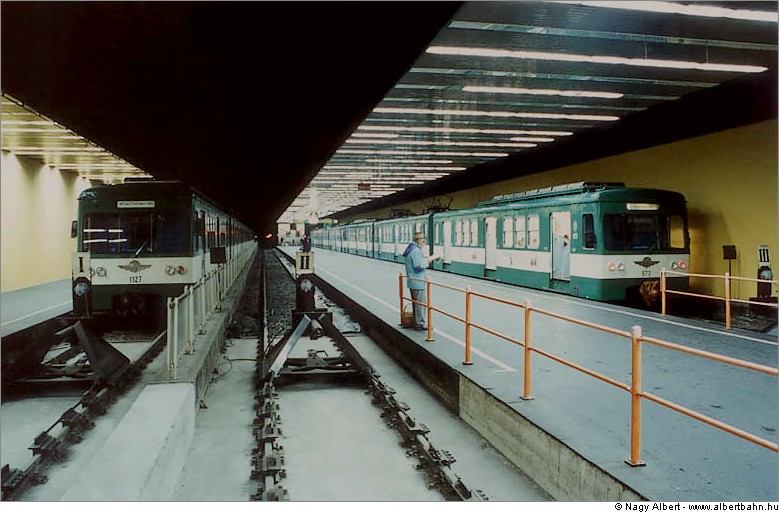
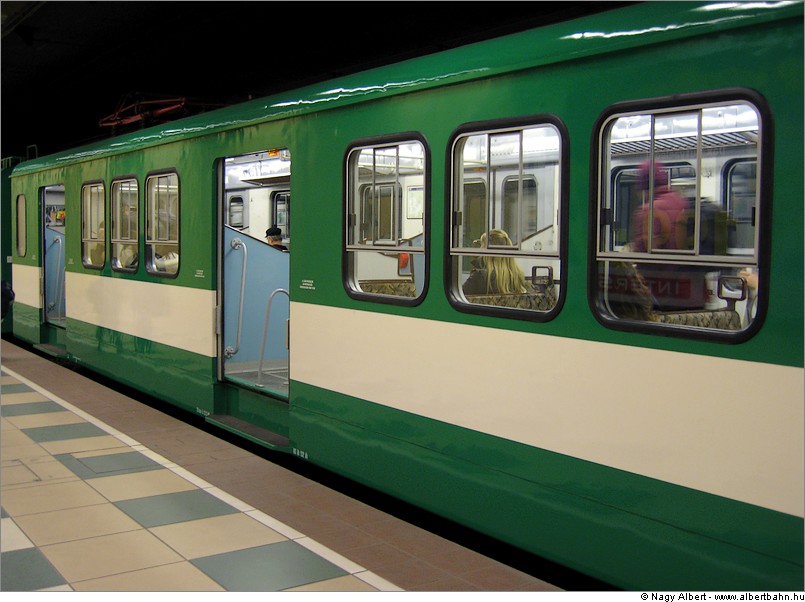
Batthyány tér terminus forms the transfer connection between the Szentendrei HÉV and the subway line M2. The HÉV was extended with a 1,1 km long underground section in 1970, simultaneously with the construction of the subway. Previously the terminal was at Margit híd (Margaret Bridge). A remain of this station is the single-track station Margit híd felszín (Margaret Bridge Surface), terminal of MÁV's trains running between Budapest and Esztergom during the reconstruction of the Northern Railway Bridge in 2008.
Please, sign in to post a new comment!

